
Thinking about running your own car boot sale? Whether it’s a one-off fundraiser for your school or a regular Sunday boot fair, a good car boot sale takes more planning than most people expect.
At Ganddee, we’ve visited dozens of car boot sales across the UK - in school playgrounds, fields, car parks and church halls. We’ve seen what makes visitors come back every week, and what leaves them queuing in the rain wondering whether the sale is even on. We also get a lot of questions from people who want to run their own.
This guide walks you through how to organise a car boot sale, step by step.
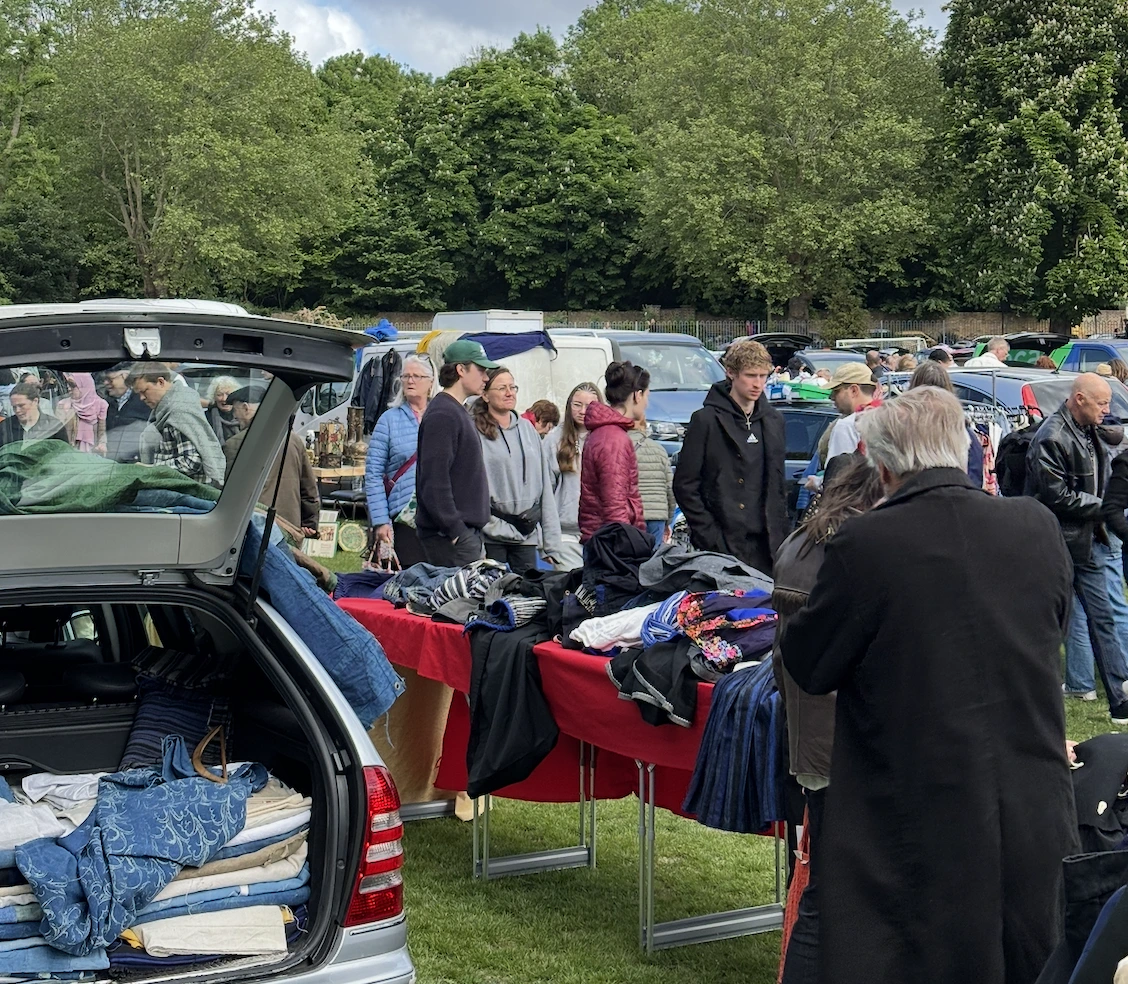
Your car boot sale checklist
| When | What to do |
|---|---|
| 2-3 months before | Choose your venue and date, get the landowner’s permission, check planning rules and sort out insurance |
| At least 1 month before | Give your council notice, set your prices and entry rules, and start recruiting volunteers |
| 1-2 months before | Publish all the details, list your sale on Ganddee, and start promoting it |
| 1-2 weeks before | Confirm sellers, draw up a volunteer rota, and buy wristbands or stamps |
| The day before | Check the forecast, decide whether you’re going ahead, and post an update |
| After the sale | Clear the site, thank everyone, and announce your next date |
Step 1: Choose the right venue
Your venue shapes almost everything else: whether dogs are allowed, how accessible your sale is, what happens when it rains, and how many sellers you can fit.
| Venue | Good for | Things to think about |
|---|---|---|
| School grounds | Hard surfaces, toilets on site, and a ready-made team of parent volunteers | Dogs are usually not allowed on school sites. Planning rules can be stricter. |
| Fields | Lots of space for big sales, and dog walkers can usually come along | Grass gets muddy and is harder for wheelchairs and buggies. You may need portable toilets. |
| Car parks | Flat, hard ground that’s easy for everyone to get around | Check you won’t block access for other users, and where your visitors will park. |
| Halls and indoor venues | All-weather sales that run in winter too | Less space, tables instead of cars, and dogs are often not allowed. |
Whatever you choose, think about:
- Size. Work out how many cars or tables fit, leaving room for buyers to walk between pitches.
- Access. Separate gates for sellers’ cars and buyers on foot make the morning much safer and calmer.
- Toilets. People stay for hours at a car boot sale. Make sure there are toilets, and that pitches are within walking distance of them.
- Parking. Where will buyers park? Is there public transport nearby?
Tip: If you want to use a school, get in touch with its Parent Teacher Association (PTA). Many PTAs already run car boot sales to raise money - Chiswick’s famous car boot sale is run entirely by parent volunteers. A PTA can help you get the site and find volunteers.
Step 2: Check permissions and insurance
This is the step most first-time organisers skip, and the one that can stop your sale altogether. Rules vary between councils, and between England, Scotland, Wales and Northern Ireland, so always check with your local council first. In England, these are the main things to look at:
- The landowner’s permission. Get it in writing, including the date, times and the area you can use.
- Planning permission. In England, land can generally be used for a market or car boot sale on up to 14 days a year without planning permission. That doesn’t usually apply if the land is within the grounds of a building, such as a school or pub car park - there, you may need permission even for one sale. If you want to run regular sales, you’ll almost certainly need it.
- Notice to the council. Under the Local Government (Miscellaneous Provisions) Act 1982, many councils require at least one month’s written notice of a temporary market, including a car boot sale. Charity sales may still need to give notice, but the process can be simpler. Holding a market without notice can be an offence.
- Market rights. Some councils protect their own markets and can object to a new sale held nearby on the same day.
- Insurance. Get public liability insurance for the event. Check what your venue’s or PTA’s policy covers - it usually won’t cover commercial sellers, who need their own.
- Food and drink. If you or your sellers plan to sell food, check the council’s food registration rules first.
- Signs on the road. Signs on the highway usually need consent from the council.
Step 3: Decide your format and prices
Before you tell anyone about your sale, settle the basics:
- One-off or regular? A regular sale (every Sunday, or the first Saturday of the month) builds a loyal crowd. A one-off works well for a fundraiser.
- Which day and time? Sunday mornings are the classic slot. Weekday sales are rarer, so there’s less competition.
- Bank holidays. Decide whether you’ll run on bank holiday weekends, and say so. Visitors often assume a regular sale is off - or on - and turn up for nothing.
- Seller pitch prices. Many car boot sales charge a fixed price per car, with more for vans or extra space. School sales often charge £5-£10 a pitch, but prices vary a lot by area.
- Buyer entry prices. Most sales charge buyers a small entry fee, often £1. Many charge more for “early bird” entry. In London, for example, Capital Carboot charges £7 for early birds, then £5, then £1 later in the morning. Picketts Lock is free after 11am.
- Cash or card? Many car boot sales are cash only. If you are too, say so clearly - and tell people where the nearest cash machine is.
Step 4: Plan how people get in and out
At a car boot sale, people come and go all morning. They pop back to the car with a heavy find, nip out for coffee or a cash machine, and want to come back in without paying again. You need a way for your gate volunteers to tell who has already paid. There’s a solution for every budget:
| Method | How it works | Cost |
|---|---|---|
| Wristbands | Every paying visitor gets a paper wristband. Use a different colour each time, so old ones can’t be reused. | Low - you buy them in bulk |
| Hand stamps | Visitors get an ink stamp on the hand when they pay, like at a nightclub. | Very low - a stamp and an ink pad |
| Passcodes | Visitors who want to come back ask for the passcode as they leave, and say it at the gate to get back in. | Free |
The passcode approach works brilliantly if you have no budget at all. At Chiswick Car Boot Sale, the code is a simple word - one month it might be “sunshine”, the next “bicycle”. If you’re leaving and want to come back, you tell the volunteers on the gate, and they whisper the code to you so nobody else hears. When you come back, you say the code and walk straight in. Change the word every time you run the sale.
Whichever method you choose, tell your visitors about it in advance and put up a sign at the gate.
Step 5: Plan the day itself
A smooth morning comes down to timings and rules that everyone knows in advance. Plan:
- When sellers can arrive and set up. Give an exact time when the gates open for sellers, and when they need to be set up by.
- The queuing rules. Sellers often queue very early to get the best pitches. Be precise: when can they start queuing, where, and are pitches first come, first served or allocated? Vague rules cause the most frustration on the day.
- When buyers can come in. Give exact entry times for each price - for example, early birds from 7am and general entry from 8am.
- Your layout. Draw a simple site map with pitches, walkways, toilets, food, and the entry and exit gates.
- What sellers can’t sell. Set out clear rules, for example no counterfeit goods, weapons or unsafe electricals.
- Rubbish. Provide bins, and make sure sellers take home whatever they don’t sell or donate. Many charities offer free collection for leftovers.
- Bad weather. Decide in advance at what point you’ll cancel, and who makes the call.
Step 6: Get a team of volunteers
You don’t need paid staff to run a good car boot sale. Many of the UK’s best-loved sales are run by volunteers. If you’re using a school site, the PTA is the obvious place to start. Churches, sports clubs and residents’ groups are good options too.
Roles you’ll need to fill:
- Gate volunteers to take entry fees and manage re-entry
- Pitch stewards to collect seller fees and guide cars to their pitches
- Car park marshals, if visitors park on site
- Refreshments - a tea and cake stand is also a great way to raise extra money
- Litter pickers for the end of the day
Draw up a rota so nobody is stuck on the gate all morning. Give stewards hi-vis vests so visitors know who to ask.
Step 7: Tell visitors everything they need to know
This is where many car boot sales fall down. Visitors want to plan their morning, and when the information is missing, many simply won’t come. Before your sale, make sure you’ve answered:
- Where and when is it, and is it a one-off or regular? Does it run on bank holiday weekends?
- How much is entry, and what are the early bird times and prices?
- Is it indoor or outdoor?
- What happens if the weather is bad? If the sale might be cancelled, tell visitors where to find the latest updates - for example, your Instagram or Facebook page.
- Are there toilets?
- Is it accessible for wheelchairs and buggies?
- Is there parking for visitors?
- Are dogs allowed? Lots of people walk their dogs at weekends and want to drop into a car boot sale on the way. Tell them clearly either way.
- Is it cash only?
And for sellers:
- How much is a pitch, and do they need to book?
- When can they arrive, start queuing and set up?
- What can’t they sell?
Want to help your sellers make the most of the day? Send them our car boot sale tips for sellers.
Step 8: Promote your car boot sale
The more people know about your sale, the more sellers and buyers you’ll get - and the sooner you start, the better. Here’s what works:
- List your car boot sale on Ganddee. It’s free, and it puts your sale in front of the hundreds of thousands of people who use Ganddee to find car boot sales near them. List your sale here, and it will also appear in our online car boot sales finder.
- Post on Instagram and Facebook, including local community groups. Keep posting in the days before the sale, and on the morning itself.
- Tell your local shops, and ask if they’ll display a poster or leaflets.
- Use your network. School newsletters, church notices, community centres and noticeboards all help.
- Put up signs near the venue in the week before (with permission).
Step 9: After the sale
- Clear the site and leave it as you found it.
- Thank your volunteers, sellers and venue, and share how much you raised if it was a fundraiser.
- Ask for feedback and note what to change next time.
- Announce your next date while people are still talking about it - and update your Ganddee listing.
Organising a car boot sale: FAQs
Do I need permission to hold a car boot sale?
Usually, yes. You need the landowner’s permission, and most councils require at least one month’s notice. In England, you may also need planning permission, especially for regular sales or sales on land within the grounds of a building, such as a school. Check with your council before you set a date.
How much should I charge for a car boot pitch?
It depends on your area and the size of your sale. School and community sales often charge £5-£10 per car. Larger regular sales usually charge more, especially for vans.
How much should I charge visitors?
Most car boot sales charge buyers £1 or less. Many charge more for early bird entry - for example £5 for the first hour, then £1 after that.
Can I hold a car boot sale at a school?
Yes - many schools host car boot sales to raise money, often run by the PTA. Start by contacting the school or its PTA. Bear in mind that dogs are usually not allowed on school grounds, and you may need planning permission.
How do I advertise my car boot sale?
List it for free on Ganddee, post on Instagram and local Facebook groups, and ask local shops to display a poster or leaflets.
Running a car boot sale is a brilliant way to raise money, bring your community together and give pre-loved things a second life. Plan ahead, communicate clearly, and you’ll have visitors coming back for more.
Ready to go? List your car boot sale on Ganddee for free.
Related guides
- Car Boot Sale Tips for Sellers: 10 Ways to Sell More
- Car Boot Sale Tips for Buyers: How to Find the Best Bargains
- Car Boot Sales Near Me: How to Find One This Weekend
- Chiswick Car Boot Sale: Dates, Entry Fee and Insider Tips
- Indoor Car Boot Sales UK: Where to Find Them All Year Round


