From the pavement, a charity shop and a high street chain can look like the same thing. Clothes on rails. Items on shelves. A till by the door.
Look closer and they are two completely different machines.
A charity shop and a Zara branch sell to the same shopper, on the same street, under the same weather. But the way stock arrives, the way the shop is staffed, and the reason the shop exists at all - none of it lines up.

This post breaks down the real differences, then covers the pressures every shop faces regardless of model. If you want the behind the scenes basics first, start with our Ultimate Guide to Charity Retail.
The Big Picture: Charity Retail vs “Normal” Retail
Here’s the short version before we dig in.
| Charity retail | ”Normal” retail | |
|---|---|---|
| Stock | Unpredictable donations, arriving all day, needing sorting | Bought from suppliers, boxed and ready to display |
| People | Small paid team plus rotating volunteers | Paid staff with defined roles |
| Manager’s job | Everything at once | One role in a larger team |
| Goal | Raise as much as possible for a cause | Profit for owners and shareholders |
| Extras | Gift Aid, donation processing, waste disposal | None |
Now the detail.
Stock: Donations vs Deliveries

This is the single biggest difference.
A fashion chain buys its stock. It arrives from a supplier, folded, boxed and sorted by size. Staff know what’s coming, when it lands, and where it goes on the floor. Supply is planned months ahead.
A charity shop has none of that control.
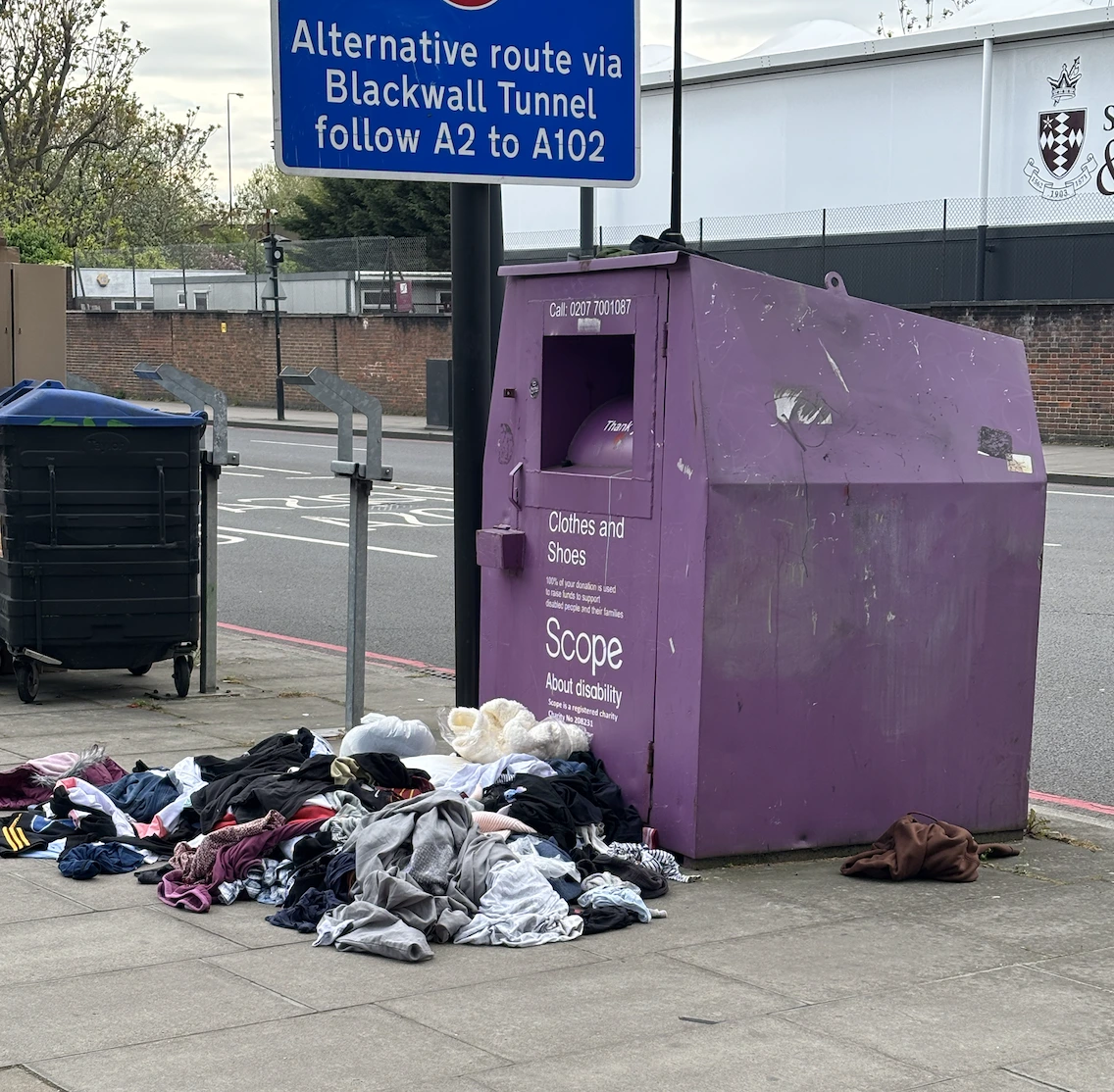
Stock comes from donations. Bags land at the door at random times, all day long. Nobody knows what’s inside until someone opens them. One bag might hold a designer coat. The next might hold three odd shoes and a broken kettle.
Every item then has to be sorted, checked, cleaned, steamed, priced and prepared before it can go anywhere near a rail. That’s hours of labour before a single sale.
And the mix rarely matches the shop. A shop in one area might be flooded with size 8 dresses when its regulars want size 16. A chain would simply order more of what sells. A charity shop takes what it’s given.
So the same job - fill the shop floor with sellable stock - is a controlled process in one model and a daily puzzle in the other.
People: Volunteers vs Paid Rotas
Most charity shops run on a small paid core, often just a manager and an assistant, supported by volunteers.
Volunteers are the engine of the shop. They sort, steam, price, display and serve. Without them, the numbers don’t work.
But volunteers come and go. Someone gives a morning a week, then moves, changes jobs, or simply stops. There’s no contract holding a rota together. Every departure means recruiting and training someone new, and that friction never really stops.
A high street chain schedules paid staff against forecast footfall. If someone leaves, HR posts the role and fills it. The rota is a spreadsheet problem, not a recruitment campaign.
Same shop floor, very different staffing reality.
The Manager Who Does Everything
In a Zara or H&M, roles are split. Visual merchandising, stockroom, tills, management, social media posting - different people, different jobs.
A charity shop manager does the lot.
They process donations. They rotate stock. They cover the till. They train and motivate volunteers. Many also run their own Instagram or TikTok to pull people in, because there’s no marketing department doing it for them*. They keep an eye on the floor, the back room and the books at the same time.
There’s no wall of staff with a badge for every task. There’s one person wearing every hat, most days of the week.
* the head office might help, but managers still want to drive footfall to their specific shop.
The Mission: Money for a Cause, Not Shareholders
This is the difference that shapes everything else.
A for profit retailer exists to make money for its owners. It can raise investment against equity, subsidise loss making stores for years, and chase growth on someone else’s capital. Some cut costs by squeezing wages and conditions.
A charity shop exists to raise as much as possible for its cause. Every pound saved on operations is a pound more for the mission. That sounds simple, but it creates a tight squeeze.
A charity can’t afford to sell everything at rock bottom prices to shift volume. It doesn’t control supply well enough to bank on that, and it can’t lean on outside investment to cover the gap. So managers walk a constant line between impact and income: price too high and items sit, price too low and the cause loses out.
It’s a balancing act that a purely commercial player never has to think about.
This is also why “why is this charity shop so pricey?” is a more complicated question than it looks. We wrote about that here.
Gift Aid: The Mechanic Only Charities Deal With
Here’s a whole layer of work no high street chain ever touches.
Gift Aid lets a charity claim an extra 25% from the government on top of the sale price of a donated item, at no cost to the donor. Donate a pair of boots, agree to Gift Aid, and if they sell for £10, the shop can raise £12.50 instead.
But that money doesn’t appear by magic. Gift Aid items have to be labelled, tracked and reported correctly. Donors have to be signed up. Sales have to be linked back to the right donor so the claim stands up.
It’s real fundraising upside, and it’s real admin. Either way, it’s a job that only exists in charity retail.
What Both Models Share
For all those differences, charity and commercial retail sit on the same high street and feel the same squeeze from three directions.
Rising rents
Shop rents keep climbing. A charity feels this exactly like a chain does, except it’s paying with money that was meant for a cause, not for profit. When a lease renews at a higher rate, the fundraising target quietly goes up with it.
Rising wage and National Insurance costs
From April 2025, the National Living Wage rose and employers’ National Insurance contributions went up, both through a higher rate and a lower starting threshold. That lifts the cost of every paid role.
Charities feel it through their paid managers and assistants, and again through suppliers and contractors who pass their own higher costs along. Meanwhile donations and sales stay unpredictable. Costs firm up. Income doesn’t.
Competition from resale apps
Platforms like Vinted, Depop and eBay have made second-hand shopping something you can do from the sofa. That’s brilliant for the circular economy, and it’s real competition for physical shops.
Some of the stock that once went to a charity shop now gets listed online by the owner instead. Some shoppers who once browsed the rails now scroll a feed. Charity and commercial retail are both fighting for attention against an app that never closes.
Same Street, Different Game
So next time you walk past a charity shop and a chain store side by side, remember what’s actually going on behind each window.
One buys its stock and staffs it to a plan. The other turns a river of unpredictable donations into fundraising, powered by volunteers and a manager doing ten jobs at once - all to send as much money as possible to a cause.
They look alike. They really aren’t.
At Ganddee, we celebrate the people and places that make second-hand shopping thrive. If you run a charity shop, list it on Ganddee for free to get in front of hundreds of thousands of thrifters across the UK and Ireland.
And if you’re a shopper, get the app to find the best charity shops near you - starting with the best areas for charity shopping in London.