Fly-tipping is one of the most frustrating and costly problems facing charity retail teams today.
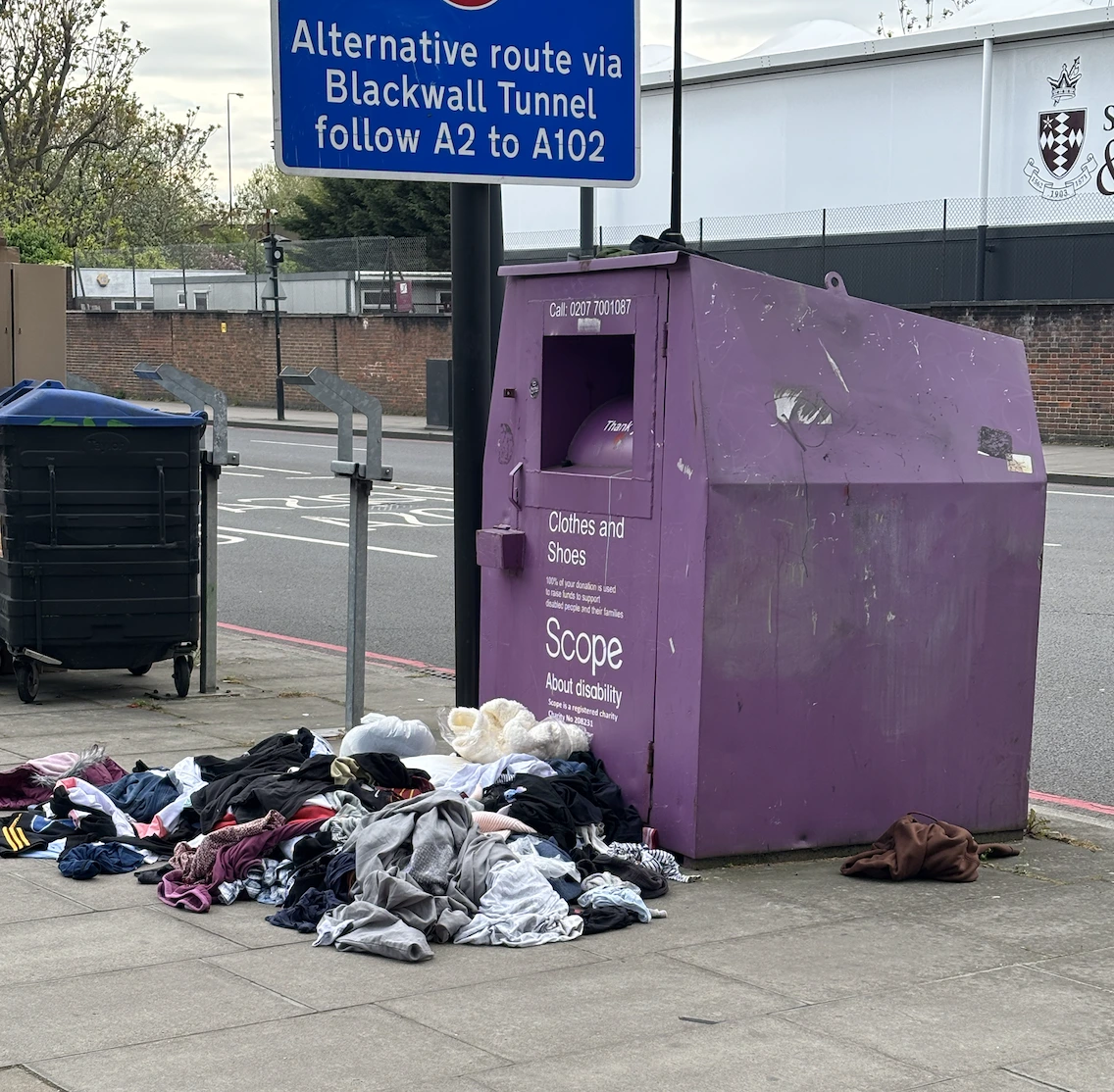
Across the UK and Ireland, charity shops regularly arrive in the morning to find bags of donations left outside their doors, dumped beside donation banks, or abandoned overnight when shops are closed or unable to accept stock.
While these donations are usually well-intentioned, the reality is harsh: fly-tipped items often become unsellable, unsafe, and expensive to deal with.
This guide looks at:
- why fly-tipping happens so often around charity shops
- the real cost it creates for charities
- and, most importantly, how charities can prevent it through better communication, including how Ganddee was built specifically to address this problem.
What Is Fly-Tipping in Charity Retail?
In a charity retail context, fly-tipping usually refers to people leaving donations:
- outside closed shops
- next to full donation banks
- outside shops that are temporarily not accepting donations
Once items are left outdoors, they are exposed to:
- rain and damp
- pests and insects
- contamination from food waste
- vandalism or theft
Even donations that look “fine” often cannot be sold due to hygiene and safety rules.
What many donors don’t realise is that these items frequently become waste, not income.
Run a charity shop? Ganddee puts your shop in front of local shoppers and donors, and tells them when you can take donations. See how Ganddee works for charity shops.
Why Fly-Tipping Is Such a Problem for Charity Shops
It Destroys Otherwise Valuable Donations
Textiles and soft furnishings left overnight can absorb moisture and odours. Furniture can warp. Electrical items can become unsafe.
Once contaminated, these items often cannot legally be sold.
It Creates Extra Costs
Charities frequently have to:
- pay for commercial waste removal
- allocate staff time to clear dumped items
- deal with pest control
- absorb disposal costs
Money that should support the cause instead goes on cleaning up.
It Creates Health & Safety Risks
Fly-tipped donations can:
- block entrances
- create trip hazards
- attract vermin
- expose staff and volunteers to unsafe handling conditions
It Harms Staff and Volunteer Morale
Repeatedly clearing dumped donations is demoralising, especially when teams are already stretched.
Why People Fly-Tip (Even When They Mean Well)
Most fly-tipping near charity shops is not malicious.
It usually happens because:
- donors don’t know whether a shop is accepting donations when they go there
- shops temporarily stop taking stock due to lack of space
- donation banks are full
- donors assume items will be collected later
- signage is unclear or easy to miss
At its core, fly-tipping is a communication failure, not a goodwill failure.
The Most Effective Way to Prevent Fly-Tipping: Real-Time Donation Status
Why Static Signs Aren’t Enough
Traditional solutions rely heavily on:
- posters in windows
- handwritten notes
- taped paper signs
- social media posts that disappear after 24 hours
These methods:
- only reach people already at the shop
- are easy to miss
- quickly become outdated
- rely on donors guessing before they travel
What’s missing is real-time, shop-level communication.
How Ganddee Solves the Fly-Tipping Problem at the Source
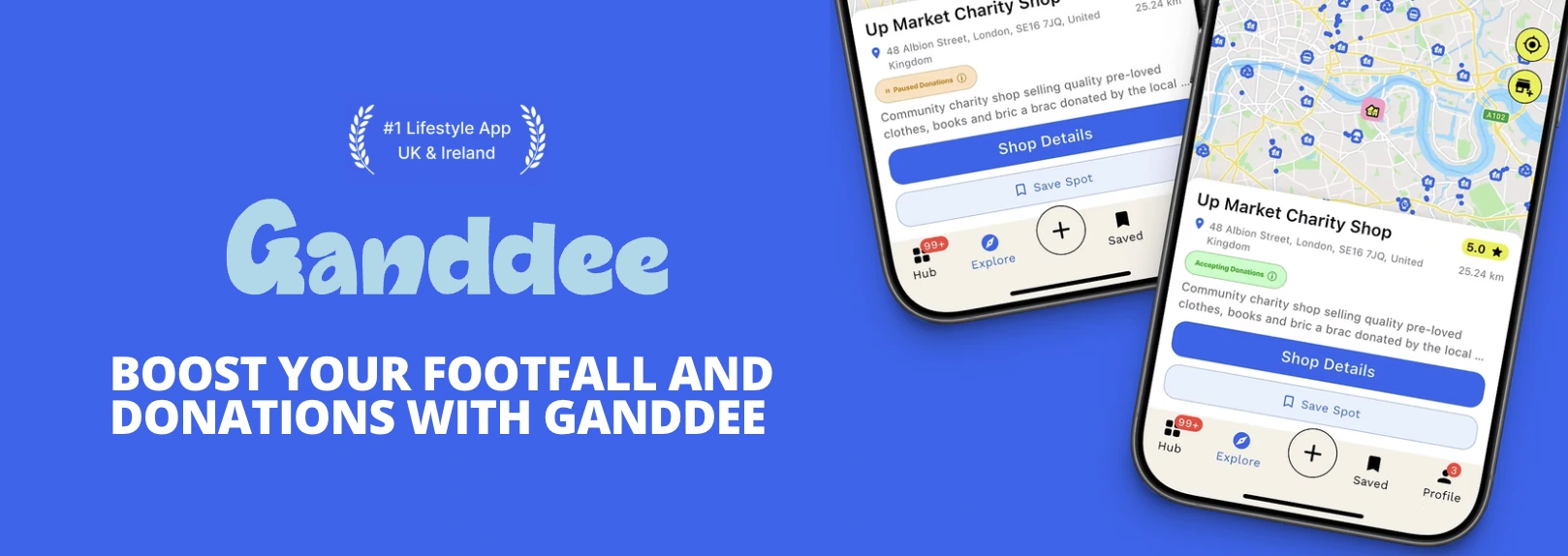
Ganddee was designed specifically to help charity shops communicate clearly with donors and shoppers before they arrive.
Live Donation Status
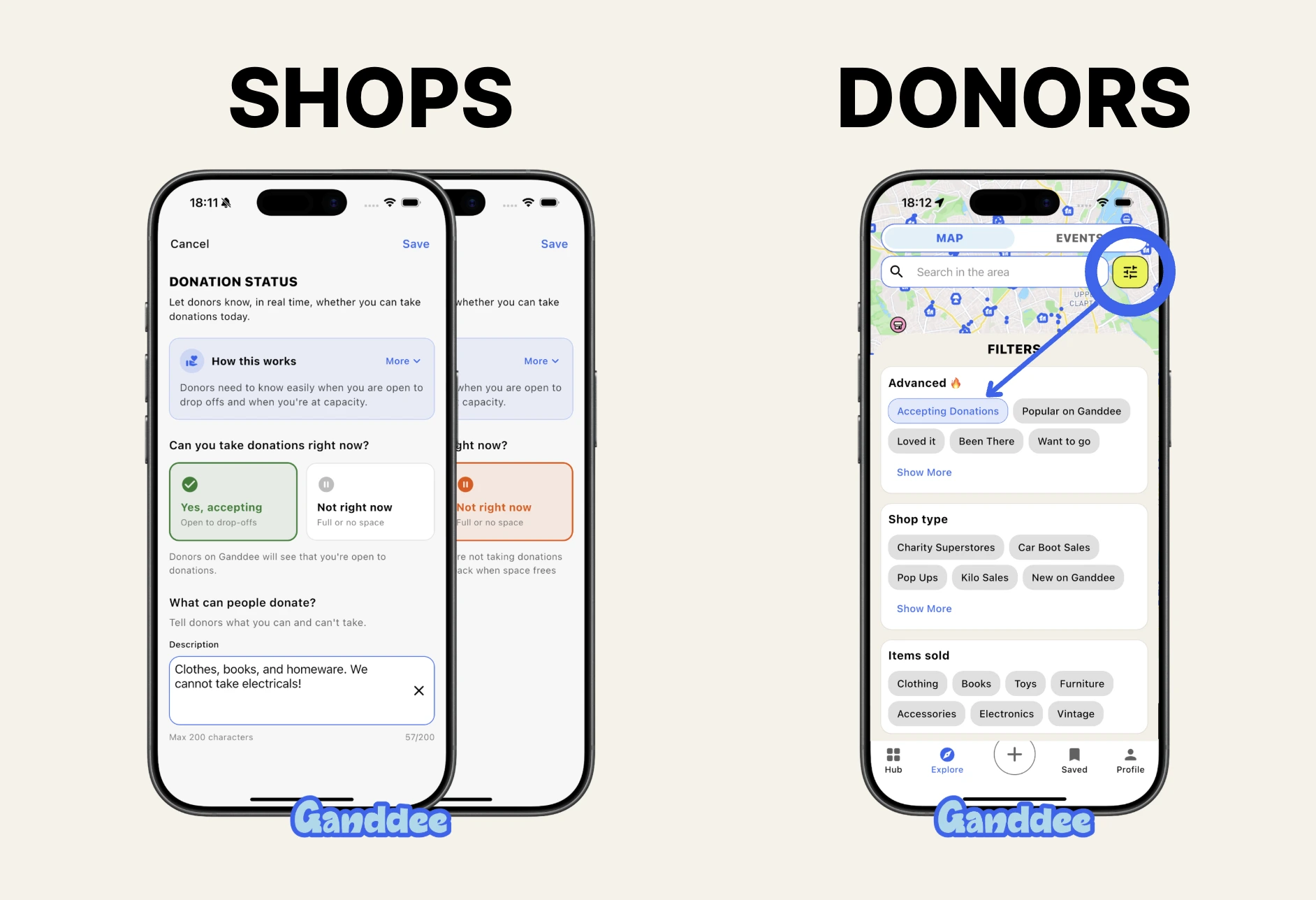
Each shop listed on Ganddee can toggle its donation status in real time:
- Accepting donations
- Not accepting donations
This status is visible instantly to users searching nearby charity shops - who can easily search for shops currently accepting donations.
Donation Guidance, Not Guesswork
Shops can also communicate:
- what types of donations they currently need
- temporary pauses due to capacity
- preferred drop-off times
This means donors:
- know where to go
- know when to go
- know what to bring
And crucially: they don’t travel to a closed or full shop and leave items outside out of frustration.
Why This Works Better Than Posters or Social Media
Unlike posters or Instagram stories:
- Ganddee is built specifically for charity retail communication
- users are actively looking to donate or shop
- information is location-specific and always current
It replaces passive signage with active, targeted real-time communication.
For fly-tipping prevention, this is a fundamental shift.
Supporting Measures Charities Can Use Alongside Ganddee
While real-time digital communication is the strongest solution, it works best when supported by consistent in-store messaging.
Clear “No Donations When Closed” Signage
Shops should use:
- large, professionally printed signs
- consistent wording
- clear placement at eye level
Consider explaining why donations shouldn’t be left:
- risk of damage
- cost to the charity
- inability to sell items
People are more likely to comply when they understand the impact.
Donation Status Signs (Open / Closed)
Just like “open / closed” signs, some shops use reversible donation signs to signal acceptance clearly during opening hours.
These work best when paired with:
- the same status shown digitally on Ganddee
- consistent staff messaging
Education Campaigns
Short, clear messages help:
- “Items left outside cannot be sold!”
- “Leaving donations in the street costs the charity money!”
Education reduces repeat behaviour.
Why Preventing Fly-Tipping Is About Respecting Donors Too
Fly-tipping doesn’t just hurt charities - it frustrates donors.
People feel annoyed when they:
- carry donations across town
- arrive to find shops full
- receive unclear or conflicting information
Clear communication:
- respects donors’ time
- channels goodwill productively
- strengthens long-term relationships
Preventing fly-tipping isn’t about saying “no” - it’s about guiding people to donate at the right time, in the right place, in the right way.
The Bigger Picture: Better Communication = Better Retail Outcomes
Fly-tipping is one symptom of a wider issue in charity retail: lack of real-time, audience-focused communication.
Charities that invest in:
- strong in-store operations (ePOS, processes)
- clear donor communication
- platforms like Ganddee that connect charity shops with the public
are the ones:
- reducing waste
- improving donation quality
- increasing footfall
- and protecting staff and volunteers
Final Thoughts
Fly-tipping is not inevitable.
It’s the result of donors wanting to help, combined with unclear or outdated communication.
By giving charity shops a simple way to say:
- “Yes, donate here - now”
- or “Not today, try this nearby shop instead”
Ganddee tackles the root cause of fly-tipping, not just the aftermath.
If your charity is spending time, money and morale cleaning up dumped donations, the solution isn’t more bins or bigger posters.
It’s better communication - before people arrive.
List your shop on Ganddee for free using this quick form, and learn more about Ganddee Pro to grow donations and footfall for your shop.
Related guides
- Online Listing Tools for Charity Shops: A Comparison Guide
- Charity Retail vs “Normal” Retail: What Really Makes Them Different